
The BallBOPPer™ History
From the Patent to the Present
The BallBOPPer™ project has a long history with lots of experiments, quite a few prototypes, and a significant list of unique solutions.
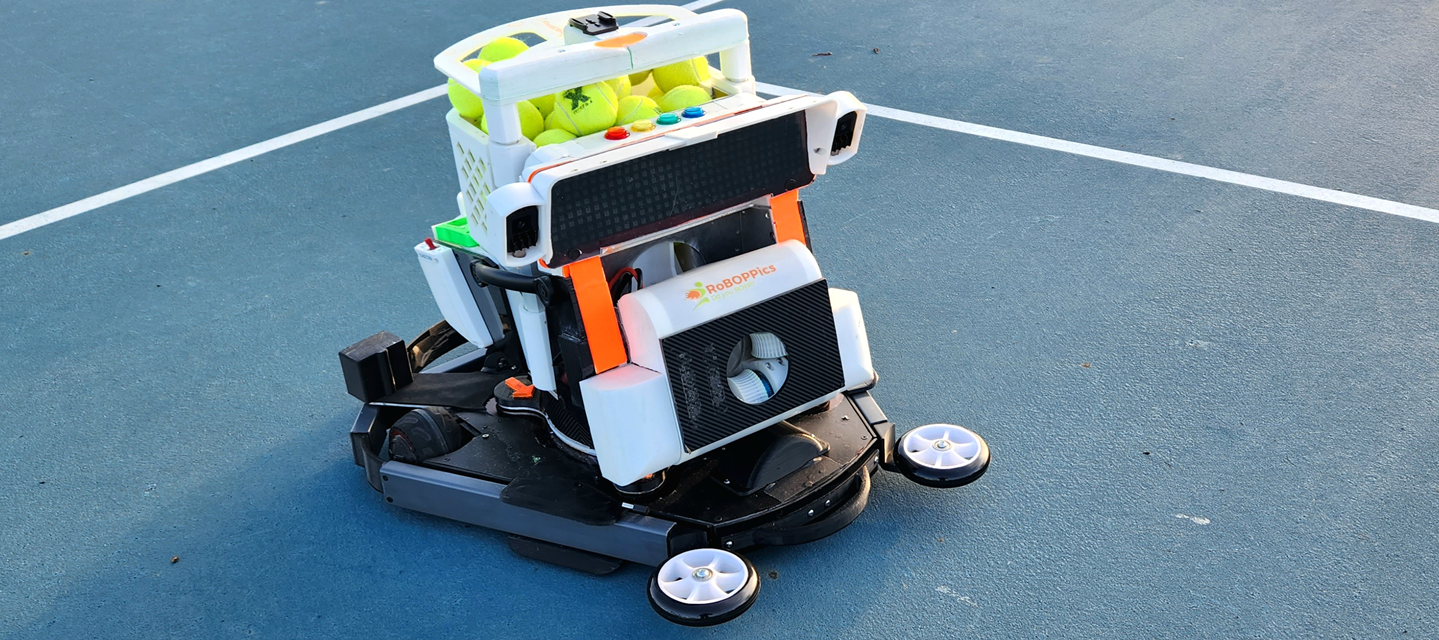
The BallBOPPer™ 2023 Prototype
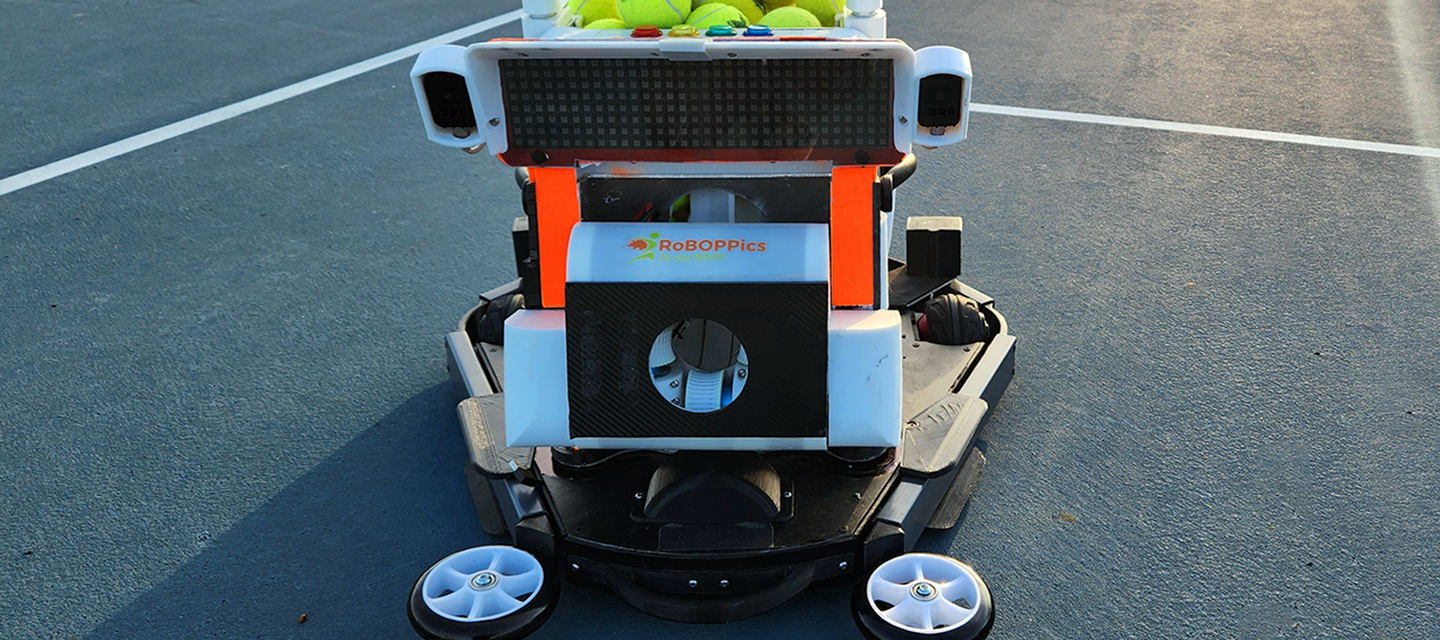
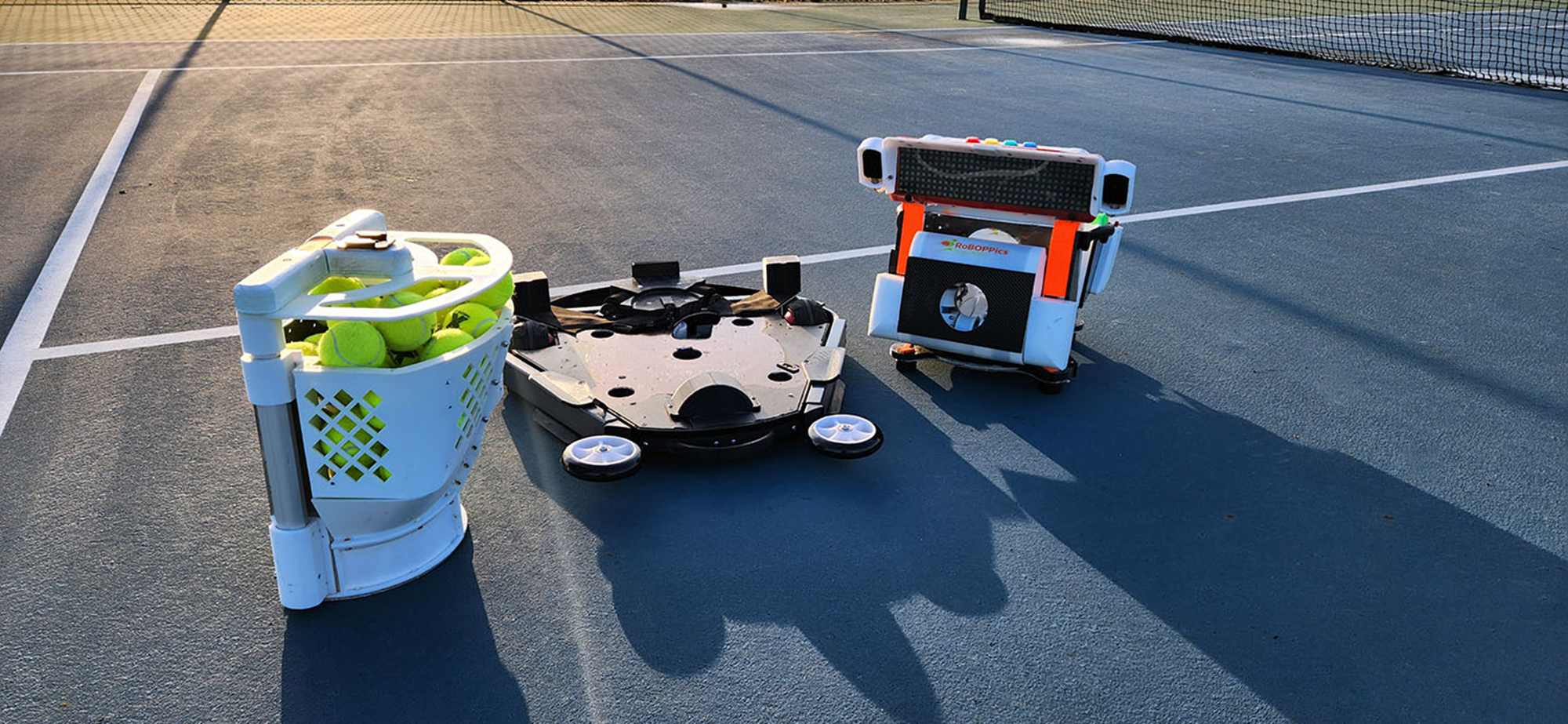
Autonomous ball launching
2013 — the patent
Where the BallBOPPer™ began
The granting of the 2013 USPTA Patent US-20140038751-A1 Personal Sports Simulation Robot is the seminal event that began the development of the BallBOPPer Autonomous Tennis Training Robot.
NOTE: The BallBOPPer™ started out in 2013 as a part-time side project. Full-time work on the BallBOPPer robot began at the beginning of 2020.
The following drawing from the original patent looks quite different from our current prototype, but the underlying design and function are still fundamentally the same.
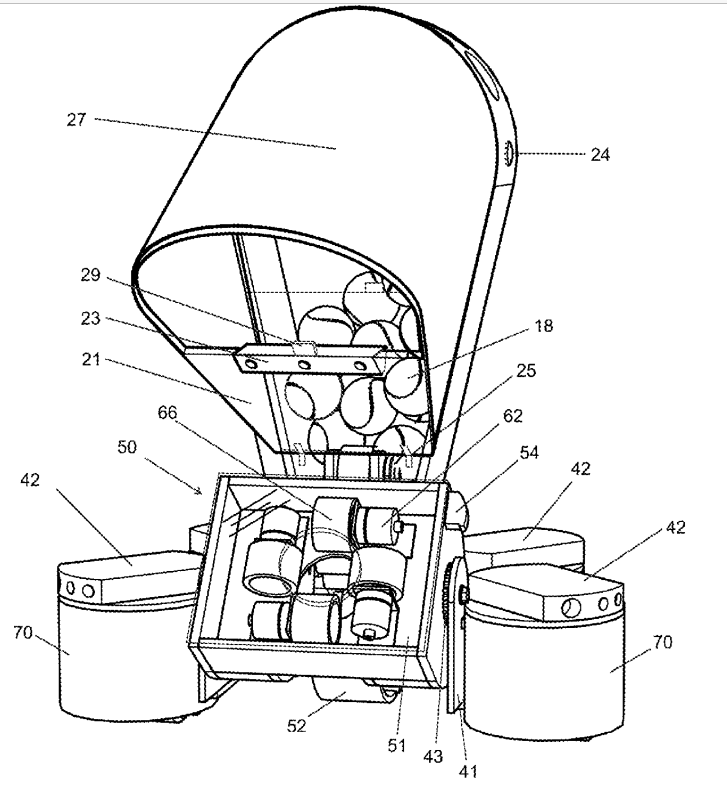
The invention as described is "a personal sports simulation robot that is able to simulate the competitive play of a human opponent with particular playing characteristics such as a particular playing strategy, a particular physicality, a particular playing style, and a particular skill level throughout the course of a simulated game or drill."
Today we simply call this True Game Play™, which is envisioned as the ability to take the robot out to any tennis court, turn it on, and be able to play tennis: points, games, sets and matches.
The early prototypes
Searching for a "personal" form factor
During the early years many different prototypes were developed and tested that explored alternative form factors. A principal design goal for the robot is to be "personal": small, light and easy to transport to and from any standard tennis court. The following three prototypes are representative of the many different prototypes that explored different ways to accomplish this goal.
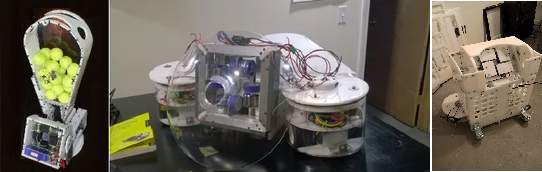
The prototype on the left most resembles the ball launcher and bucket shown in the patent. The center prototype most resembles the multi-motor, self-steering drive system shown in the patent. The right prototype was one of several different "luggage style" prototypes (pictured without the fabric outer). There was also one fully functional prototype, not pictured, that was built into an airline carry-on case.
In the end, all of these conceptual designs proved less than ideal. Too small or too large and heavy, unable to satisfy the requirements of a fully autonomous mobile tennis training robot.
A series of prototypes followed that developed more organically by letting "form follow function". Each of these prototypes were aimed at the perfection of the specific set of capabilities required to achieve the BallBOPPer's design goals.
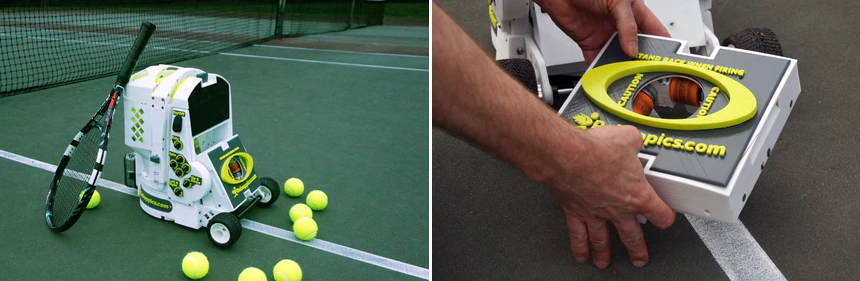
This approach led to the prototype shown above which was focused on the perfection of the compact and modular ball launching head, and the perfection of the removable, ball-hopper-like ball bucket and ball feeding system.
This prototype wasn't mobile, it wasn't smart, it only launched balls up to 3/4 court, but it was a quite nice and serviceable little ball machine.
2020 — 2023
Fully autonomous, fully modular
These two capabilities, the easy to reload ball bucket, and the compact, easy pan and tilt launching head, formed the basis of the first fully computerized robotic systems developed between 2020 and 2023.
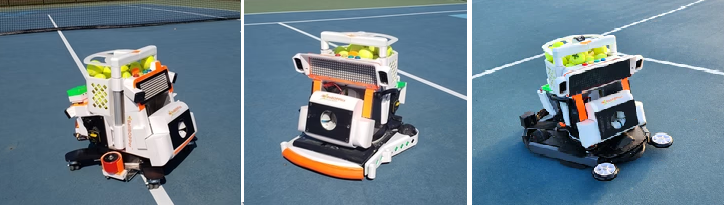
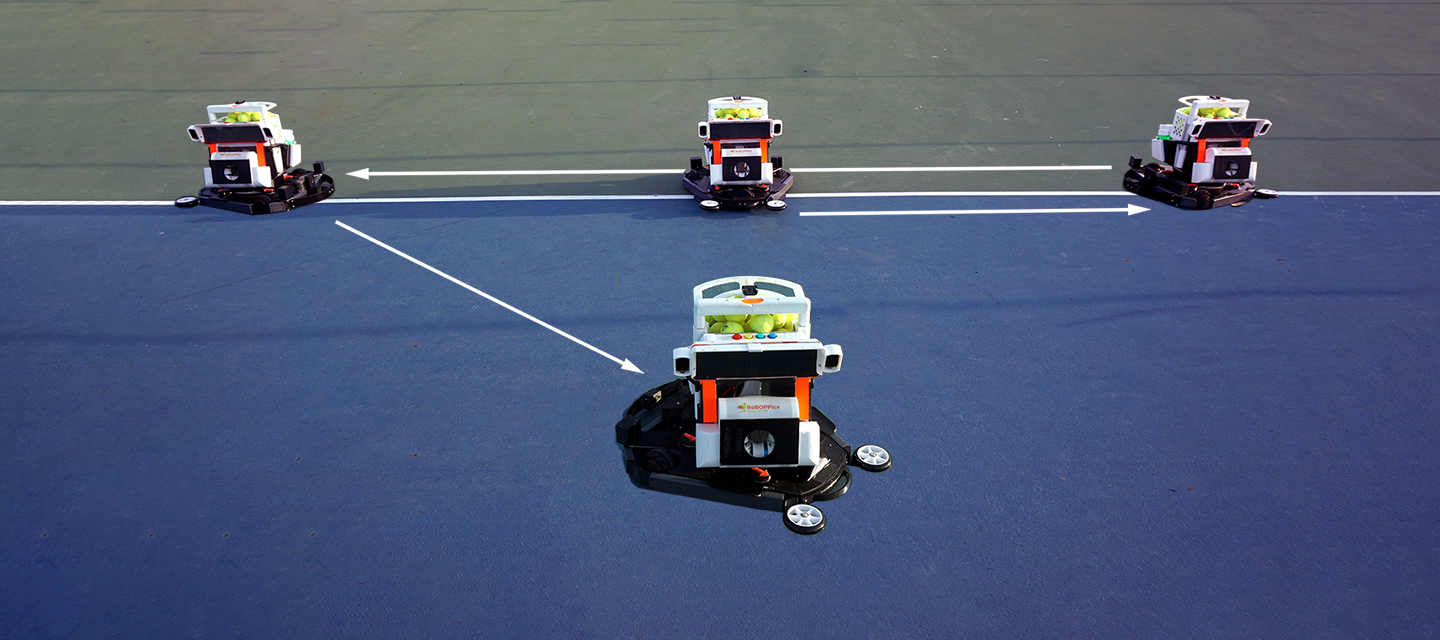
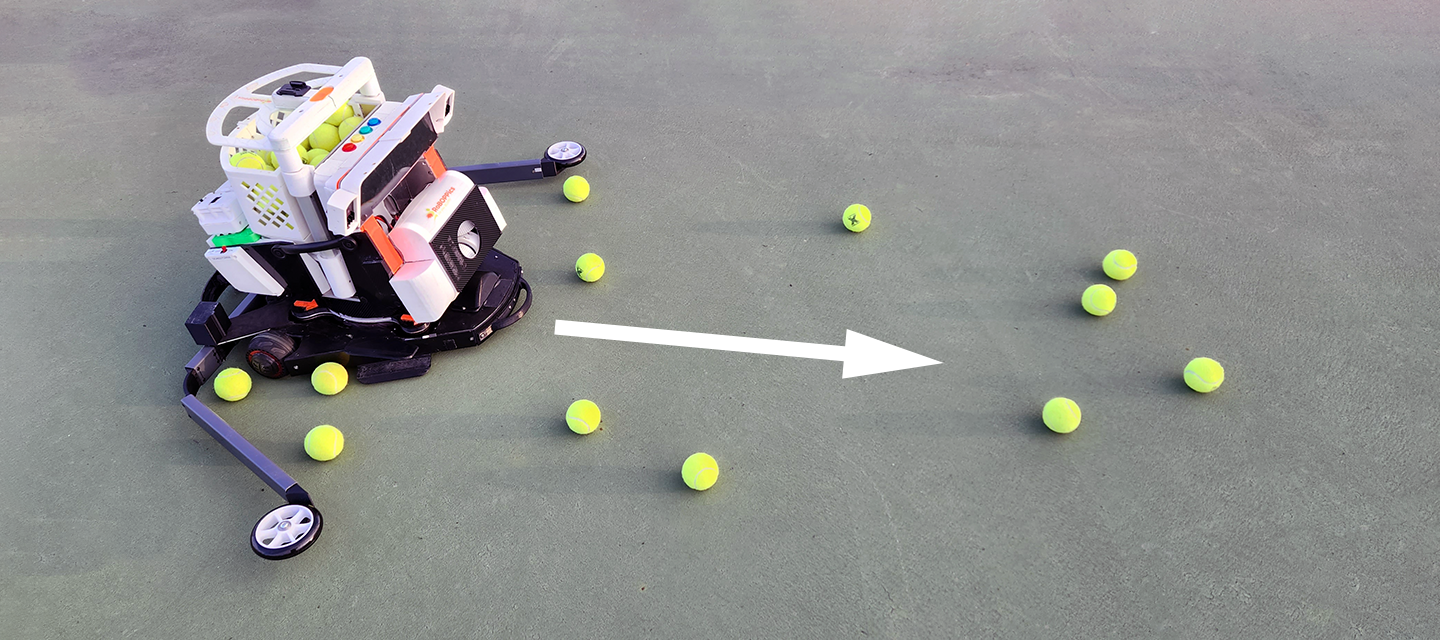
These prototypes developed the roving system, the reloading system, and the Vision AI localization system, making the BallBOPPer™ fully autonomous for both the launching and the reloading of balls.
With the 2023 prototype the system also became completely modular.
The ball launcher and rover as a single unit fell short of the "personal" design goal. The combined size and weight of the rover, reloader and launcher were enough to make the unit challenging to transport to and from the court. This was resolved by making them separate units which snap easily together on the court.
This change not only restored portability, but it has the added advantage of allowing the Player to use the launcher by itself for skills training when the roving and reloading capabilities do not necessarily add additional value.
Software and AI
From patterns of play to a tennis solver
Underneath the covers of all this is of course the software, both conventional code and machine learning AI models. These play an enormous role in the BallBOPPer's ability to deliver on its design goals.
Without all of the recent developments in Machine Learning, and Vision AI in particular, there isn't any way the BallBOPPer™ and True Game Play™ would be remotely possible. The BallBOPPer™ product is truly riding the leading edge of the "great wave of technological innovation" that is being driven in large part by Artificial Intelligence and Autonomous Systems.
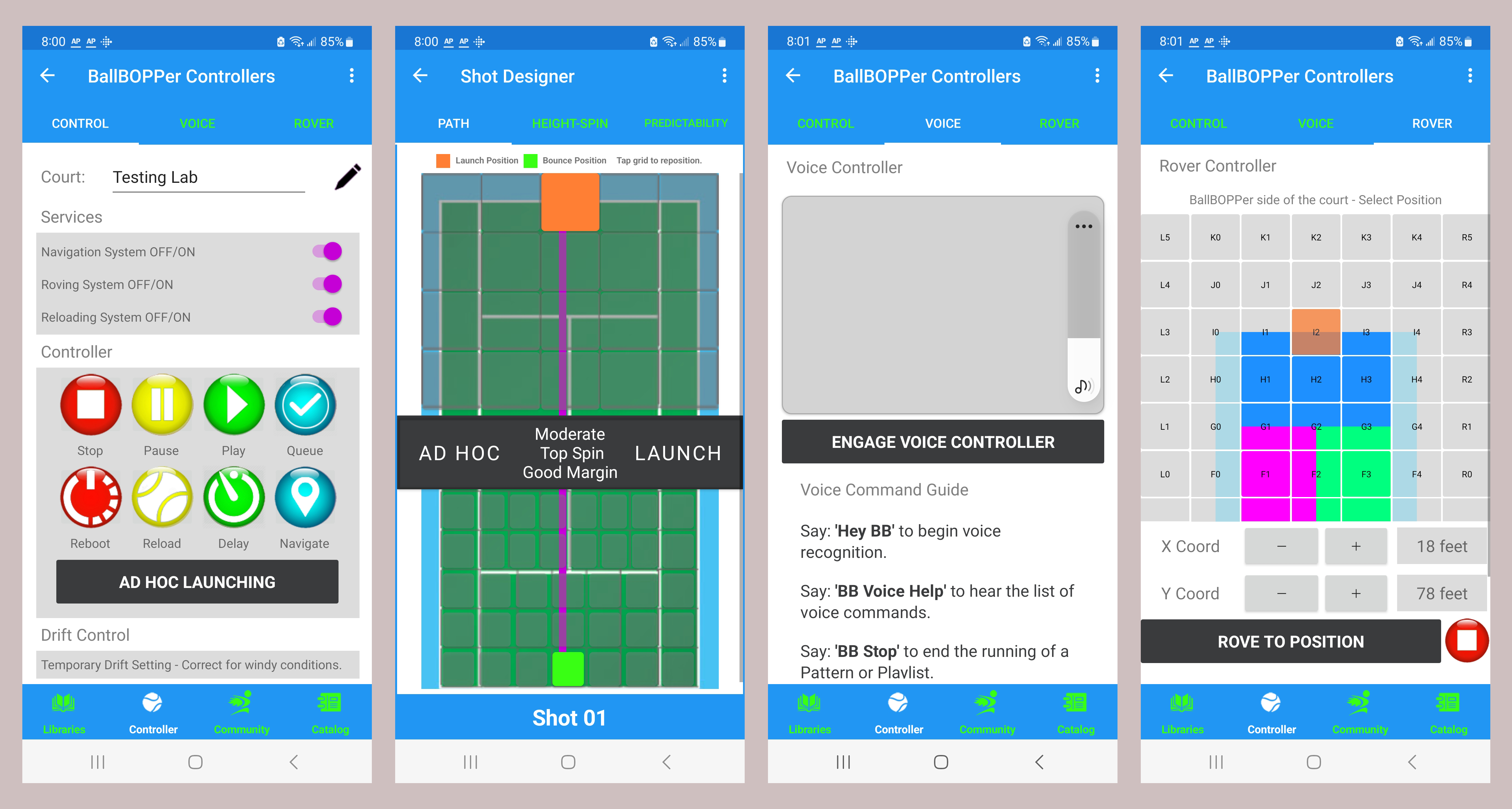
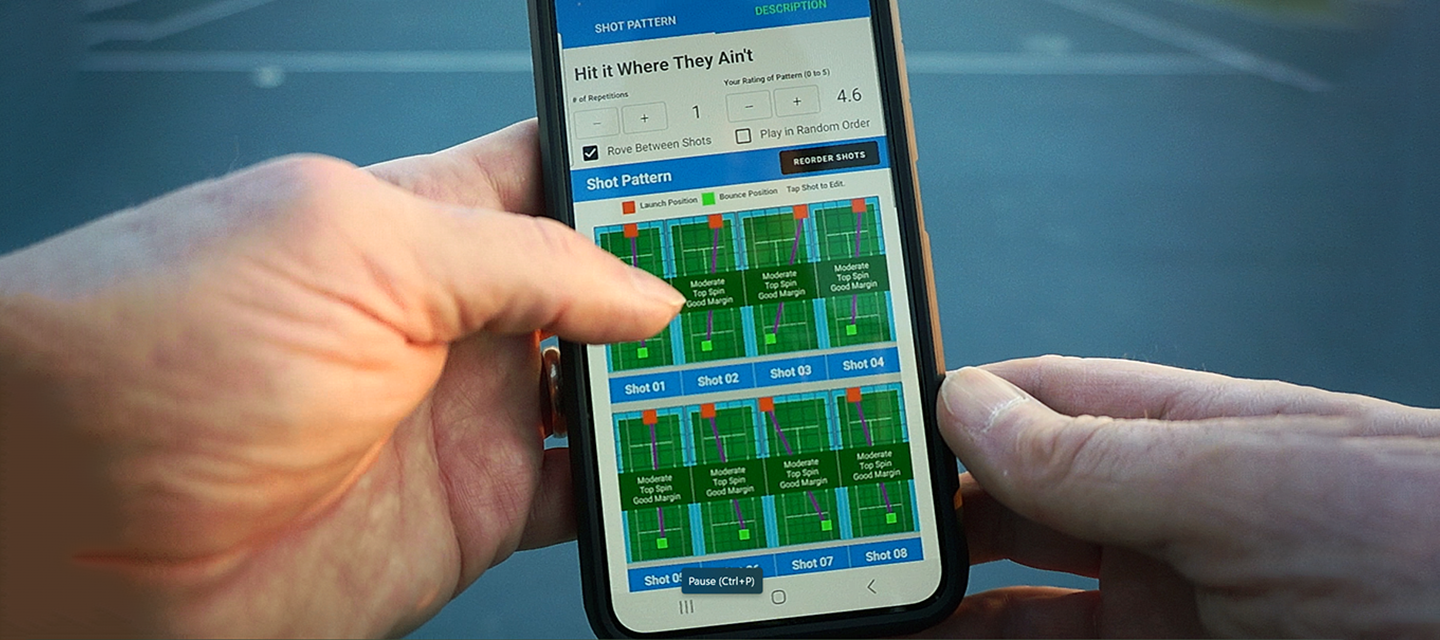
The smartphone app, a few screens of which are shown above, was out in beta on Android for several years. The capability of configuring Patterns of Play (PoP), including the innovative features Repeating Ranges, Alternating Shots and Voice Control, has proven both reliable and easy to use.
The BallBOPPer app has been deprecated.
A new app is currently under development that instead of using folklore derived "patterns of play", relies on trajectory and point statistics calculated using our tennis trajectory simulator through billions of simulated points and shots.
Instead of giving you patterns based on intuitive coaching information, the new app will provide proven tactical and strategic approaches stochastically tested using physics and geometry-based simulations. This empirical approach has proven to reveal new patterns that have not been previously considered.
The new app will be a part of the True Game Play™ suite of products and will be an essential part of the True Game Play™ system's next generation shot decision making system. It will also be usable as a standalone app that players can use as a tennis "solver" — a tool that quantifies the probabilities of their individual shot selections in a way that has not been previously possible.
TGP Open Licensing
Opening the ecosystem
Blueberry Robotics LLC is preparing to release the True Game Play™ (TGP) robot hardware design files under an open licensing model. Join us as we open the ecosystem and invite innovation from both the tennis and robotics communities.
LAB NOTES
The latest experimental results
ResearchSep 16, 2026
BallBOPPer™ 2026 Elevator Reveal
Elevation is a very important feature for any tennis training system. This is a reveal of the BallBOPPer elevation prototype as it currently appears in testing.
HardwareAug 31, 2026
BallBOPPer™ 2026 Rover Overview
New drive system, new computation and controllers, new wrangling system, embedded batteries and 360-degree sensors make the 2026 BallBOPPer™ Rover a faster, stronger and more efficient mover on a tennis court.
ResearchAug 27, 2026
BallBOPPer™ 2026 Ball Revolver Overview
The Ball Revolver is an important addition to the 2026 BallBOPPer™ that provides a number of useful capabilities.
Follow the release schedule.
New papers, data tables, and design-file drops, sent when they are published. No marketing.