
Platform overview
A portable tennis ball machine that plays points, not just drills
Most portable tennis ball machines are a hopper, a pair of wheels, and an oscillator. They feed balls. The BallBOPPer is a portable tennis ball machine built as an open research platform: it moves around the court, changes the height it launches from, and chooses each shot from a point-value model of how points are actually won.
What "portable" has to mean on a public court
Portability is a hardware constraint that shapes every design decision on this platform. Four requirements drive the mechanical and electrical work documented on this site.
01
Fits in a car
The launcher, elevator, and rover separate into modules that a single person can lift into a trunk or back seat without tools.
02
Rolls like luggage
Wheeled transport from the parking lot to the court, so setup is a walk rather than a carry.
03
Removable batteries
Interchangeable packs run the drive, elevation, and launch systems. Swap a pack instead of finding an outlet or running an extension cord.
04
No court installation
No anchors, no mounted cameras, no permanent wiring. It works on any standard court and leaves nothing behind.
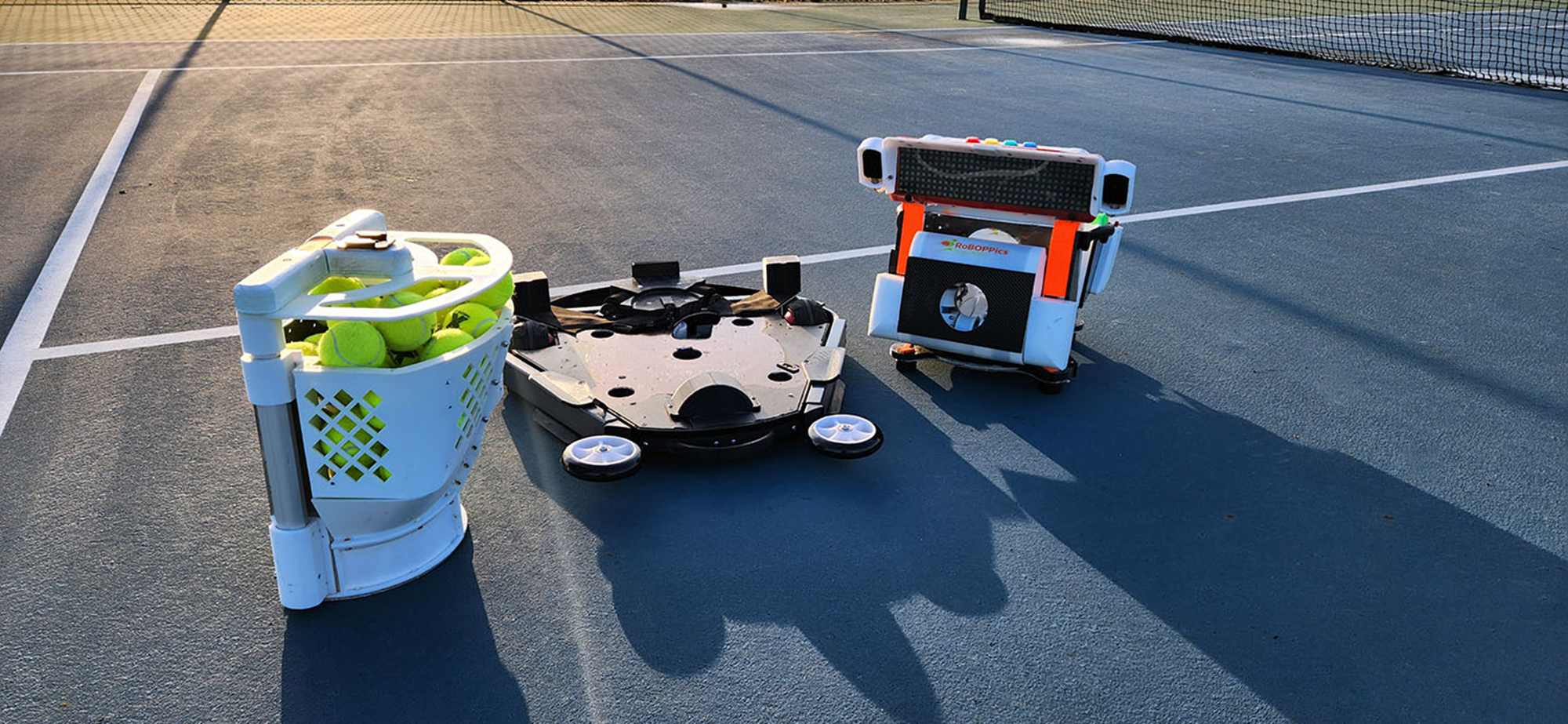
Where it differs from a conventional ball machine
| Capability | Conventional portable machine | BallBOPPer |
|---|---|---|
| Launch position | Fixed where you set it down | Rover drives to a launch position based on the trajectory of your last ball |
| Launch height | One fixed height | Elevator raises the launch head to simulate contact heights, including the serve |
| Shot selection | Preset drills and oscillation | Point-value tactics model plays points, games, sets, and matches |
| Ball collection | You pick them up | Reloader module collects balls and returns them to the revolver |
| Designs and software | Closed and proprietary | MIT-licensed CAD, firmware, and vision models |
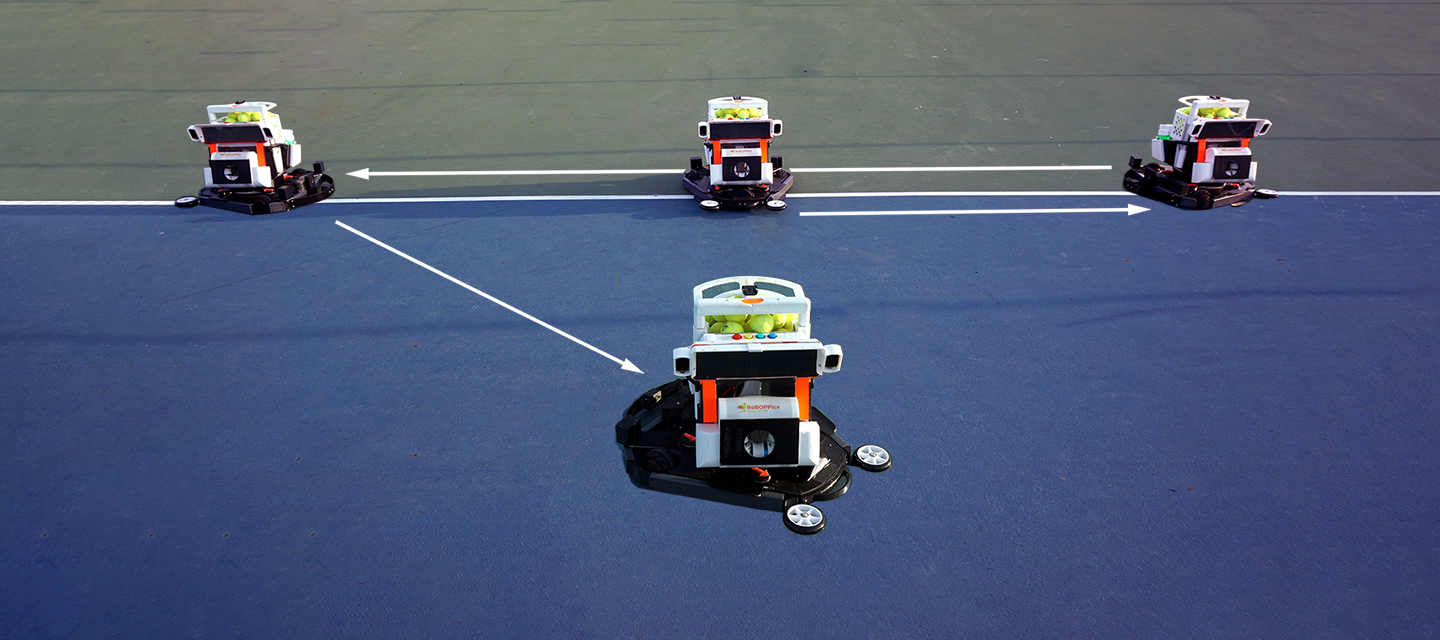
Build one yourself
Every part of the platform is published. Mechanical CAD, PCB layouts, and the bill of materials are in the designs section; the research articles record what worked and what did not.